
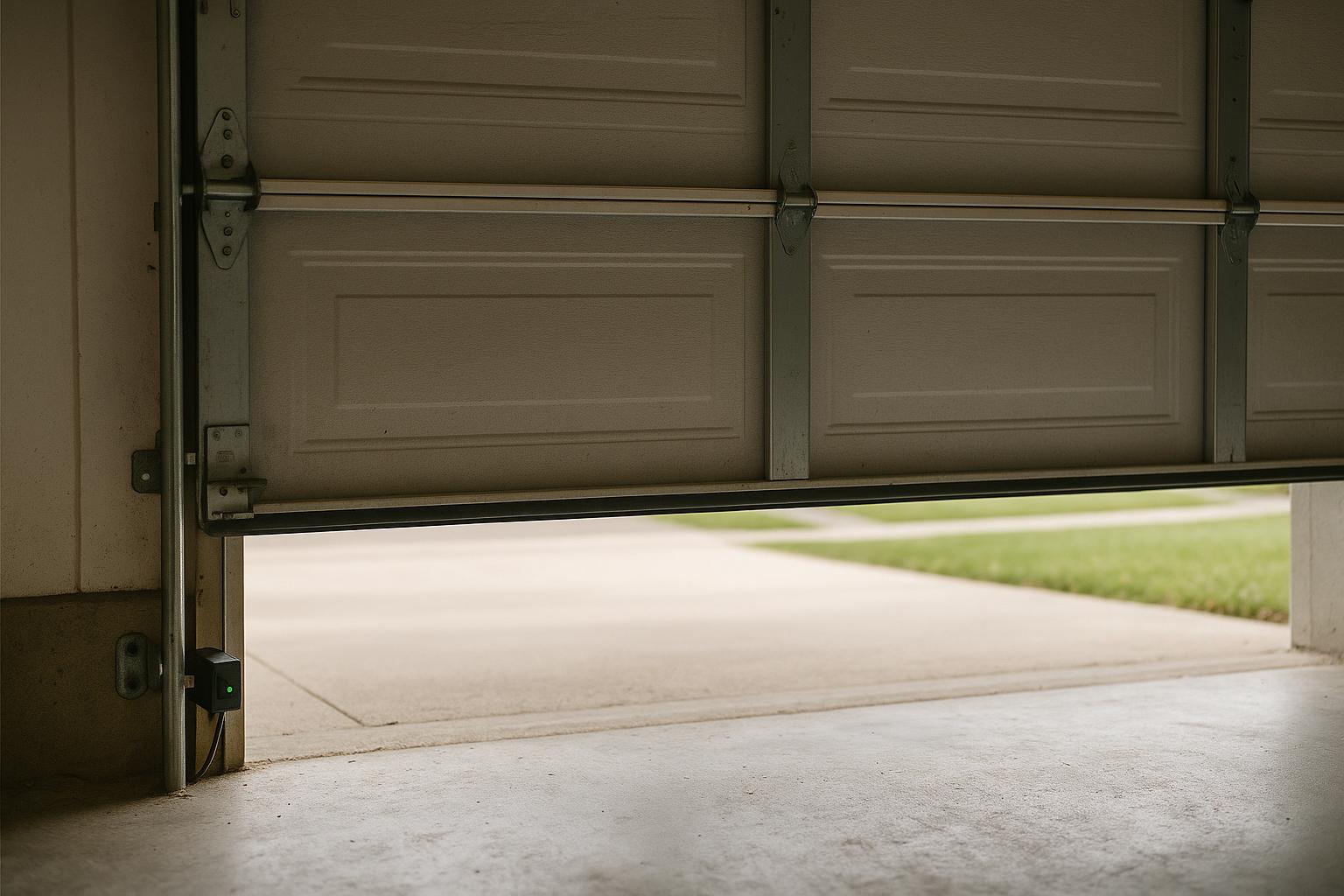
That Frustrating Moment When Your Garage Door Won't Stay Closed
You press the button on your remote, watch the garage door start its descent, and then — right before it reaches the floor — it reverses and goes back up. You try again. Same thing. Maybe you try holding the wall button down, and it still won't cooperate.
This is one of the most common garage door complaints we hear from homeowners across Canton, and it's more than just an annoyance. A garage door that won't close leaves your home vulnerable to weather, pests, and security risks. The good news is that the problem usually has a straightforward explanation, and most of the time it can be resolved quickly by a trained technician.
Let's walk through the most common reasons your garage door reverses before hitting the floor and what you can do about each one.
1. Misaligned Safety Sensors
This is the number one cause of a garage door that reverses before closing, and it's the first thing we check on nearly every service call related to this issue.
Every garage door opener manufactured after 1993 is required to have photo-eye safety sensors mounted near the bottom of the door tracks on either side. These sensors send an invisible beam across the opening. If anything breaks that beam — a child, a pet, a trash can — the door automatically reverses to prevent injury or damage.
The problem is that these sensors can become misaligned over time. Someone bumps into one while carrying groceries, a lawnmower nudges it out of position, or the mounting bracket loosens from vibration. When the sensors can't "see" each other, the opener interprets this as an obstruction and reverses the door.
What to Look For
- Check the small LED lights on each sensor. Typically, one glows green (sending) and one glows amber or green (receiving). If either light is blinking or off, the alignment is likely the issue.
- Look for obvious physical damage or dirt covering the sensor lens.
- Make sure nothing is sitting in the path between the two sensors.
You can sometimes fix this yourself by gently adjusting the sensors until both lights glow steadily. But if the brackets are damaged or the wiring has deteriorated, it's best to call a professional.
2. The Close-Limit Switch Needs Adjustment
Your garage door opener has limit settings that tell it exactly how far the door should travel when opening and closing. Think of it as the opener's internal map of where the floor is. If the close-limit switch is set incorrectly, the opener thinks the door has hit something before it actually reaches the ground, triggering the auto-reverse safety feature.
This is especially common after a new opener installation or when seasonal temperature changes cause the metal tracks and hardware to expand or contract slightly. Here in Canton, the swing from summer heat to winter cold can absolutely affect these settings over time.
Adjusting the limit switch usually involves turning a small screw on the opener unit itself. However, making the wrong adjustment can cause the door to press too hard against the floor, which creates a different set of problems. If you're not confident in making this adjustment, it's a quick fix for a technician.
3. Worn or Broken Garage Door Springs
Your garage door springs do the heavy lifting — literally. They counterbalance the weight of the door so the opener motor doesn't have to work as hard. When springs wear out or break, the door becomes significantly heavier for the opener to move.
Modern openers have a force-sensing feature. If the door requires more force to close than the opener expects, it assumes something is blocking the door and reverses. A weakened spring can create exactly this scenario.
Signs of Spring Problems
- The door feels unusually heavy when you try to lift it manually.
- You hear a loud bang from the garage — this often indicates a spring has snapped.
- The door closes partway, then struggles and reverses.
- The opener motor strains or sounds louder than usual.
Important safety note: Garage door springs are under extreme tension. A standard two-car garage door can weigh 200 to 300 pounds, and the springs store enough energy to cause serious injury. Spring replacement should always be handled by a trained professional. This is not a DIY project.
4. Obstructions in the Track
Sometimes the answer is simpler than you'd expect. Small debris, a buildup of hardened grease, a loose bolt, or even a slightly bent section of track can prevent the door from traveling smoothly. When the rollers hit a rough spot, the opener senses resistance and reverses.
Take a close look at both tracks from top to bottom. Look for dents, debris, or areas where the track has shifted away from the wall. You can clean the tracks with a damp cloth and remove any visible obstructions, but bent tracks or loose mounting hardware should be addressed by a professional to avoid making the problem worse.
5. The Opener's Force Settings Are Too Low
Related to the limit switch issue, your opener also has force settings that control how much power it uses to open and close the door. If the closing force is set too low, the opener may not push the door all the way down, interpreting normal resistance as an obstruction.
This sometimes happens after a power outage resets the opener or when homeowners accidentally change settings while trying to fix a different issue. Like the limit switch, the force adjustment involves small screws or a digital control on the opener unit. Small, incremental adjustments are key — you never want to set the force so high that the door won't reverse when it encounters a real obstruction.
6. Damaged Rollers or Hinges
Worn-out rollers can cause the door to bind or stick at certain points during travel. Cracked nylon rollers, rusted steel rollers, or hinges with worn bearing points all create friction that the opener may interpret as an obstruction. If your door makes grinding, scraping, or popping noises during operation, worn hardware is a likely contributor.
Replacing rollers is a relatively affordable maintenance item that can dramatically improve how your door operates. During a routine maintenance visit, we inspect all rollers, hinges, and bearings and replace anything that's showing wear.
When to Call a Professional
Some of these issues — cleaning sensor lenses, removing debris from the track — are safe for homeowners to tackle. But many of the fixes involve working with springs under tension, adjusting opener electronics, or realigning heavy components. Getting these wrong can create safety hazards or cause more expensive damage down the road.
At Canton Garage Door Service, we diagnose the root cause before we touch a single tool. We explain exactly what's happening in plain English, give you an honest quote, and fix it right the first time. Whether you're in Massillon, North Canton, Louisville, Jackson Township, or Plain Township, we're just a phone call away.
Don't Ignore a Reversing Garage Door
A garage door that won't close isn't just inconvenient — it's a security and safety issue. Every night that door stays open is a night your home is exposed to the elements and potential intruders. Most of the causes listed above are quick, affordable repairs when caught early. Left unaddressed, they can lead to burned-out opener motors, damaged panels, or complete system failure.
If your garage door keeps reversing and you can't pinpoint the cause, give us a call. We'll get it sorted out so you can get back to pressing that button and walking away with confidence.