
Your Garage Door Shouldn't Sound Like That
You press the button, and instead of a smooth, quiet ride up the track, your garage door groans, squeals, or rattles loud enough to wake the neighbors. If this sounds familiar, you're not alone. Noisy garage doors are one of the most common complaints we hear from homeowners across Canton, and while some sounds are minor annoyances, others are early warnings of a serious — and potentially expensive — problem.
The good news? Most garage door noises have identifiable causes, and catching them early can save you from a breakdown at the worst possible time. Let's break down the most common garage door sounds, what they mean, and what you should do about each one.
Grinding or Scraping Sounds
A harsh grinding or scraping noise usually points to one of two issues: worn-out rollers or a misaligned track.
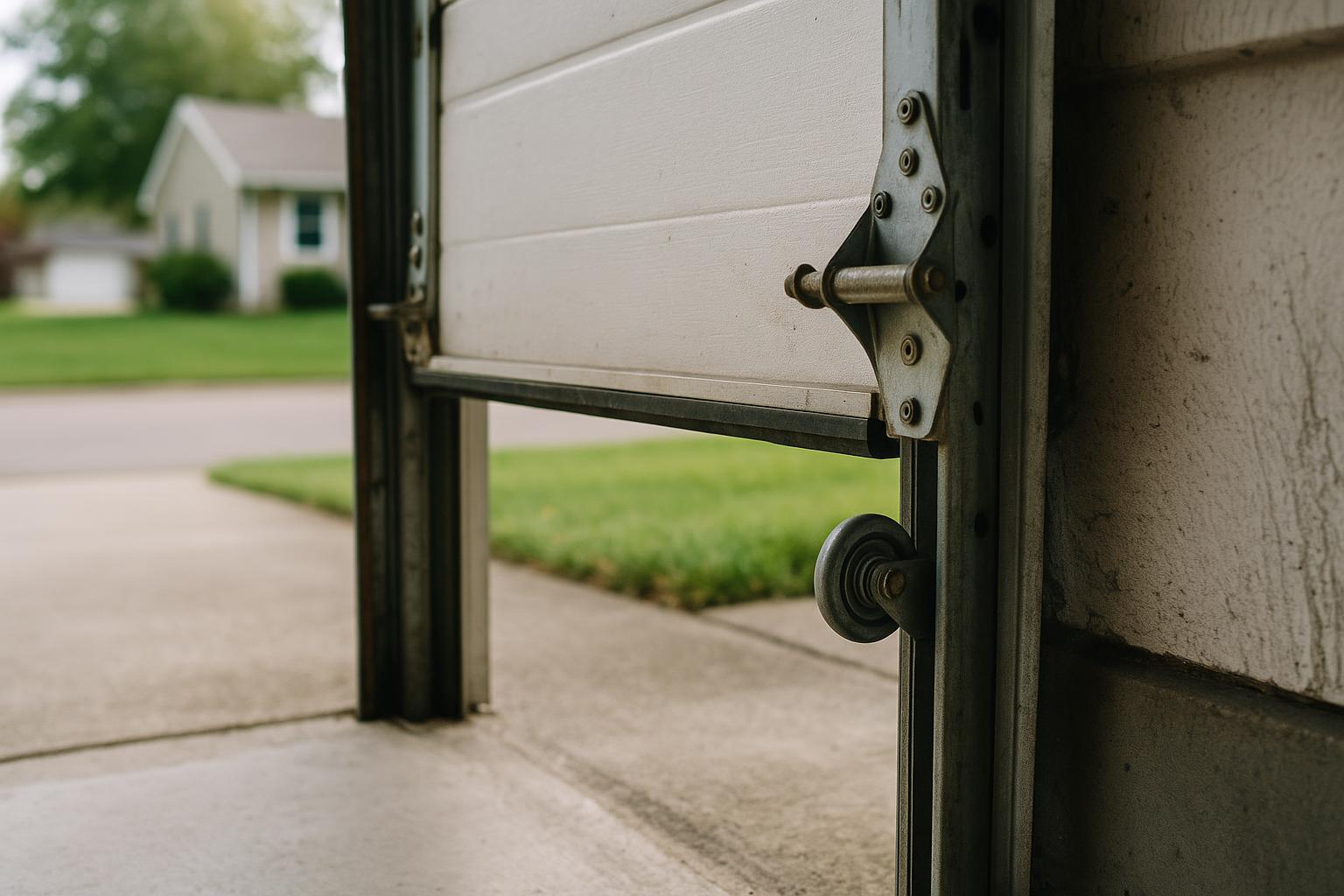
Worn rollers are one of the most common culprits behind garage door noise. Most standard garage doors come with steel rollers, which can wear down over time and start grinding against the track. If your rollers are visibly worn, cracked, or no longer spinning freely, it's time for a replacement. Upgrading to nylon rollers is a popular choice among Canton homeowners because they run significantly quieter and don't require as much lubrication.
Track misalignment is a more serious concern. If the metal tracks on either side of your door have shifted, bent, or come loose from their brackets, the door can scrape against them as it moves. You might even notice the door hesitating or getting stuck at certain points. A misaligned track puts extra stress on your opener, cables, and springs, so it's important to have it corrected before it leads to bigger problems.
Squealing or Squeaking Sounds
High-pitched squealing is usually a lubrication issue. Your garage door system has a lot of moving metal parts — hinges, rollers, springs, and bearings — and when those parts run dry, they start to protest.
Here's a quick maintenance tip: apply a garage door-specific lubricant (not WD-40, which is a solvent, not a lubricant) to the following parts every six months:
- Hinges
- Rollers and roller shafts
- Torsion springs
- Bearing plates
- The opener's rail or chain
If you've lubricated everything and the squealing continues, the problem may be deeper — worn bearings in the rollers or tension issues with the springs. At that point, it's best to have a technician take a look.
Rattling or Vibrating Sounds
Rattling is often the easiest noise to diagnose. In many cases, it's simply loose hardware. Your garage door opens and closes hundreds of times a year, and all that vibration can gradually loosen nuts, bolts, and screws throughout the system.
Grab a socket wrench and check the tightness of:
- Track brackets mounted to the wall and ceiling
- Hinge bolts on the door panels
- The bolts securing your opener to its mounting bracket
If everything is tight and the rattling persists, the chain on your garage door opener may be loose. A chain-drive opener with too much slack will vibrate and rattle during operation. Adjusting chain tension is a straightforward fix, but if you're unsure how to do it safely, a professional can handle it quickly.
Banging or Popping Sounds
A loud bang or pop when your garage door moves is more alarming — and for good reason. This sound often indicates a problem with the torsion springs or the panels themselves.
Torsion spring issues: As springs age, they can develop weak spots that cause them to shift or pop under tension. If you hear a single loud bang while the door is stationary, a spring may have actually broken. This is a situation that requires immediate professional attention — torsion springs are under extreme tension and are dangerous to handle without proper tools and training.
Panel problems: If a door panel has become warped, cracked, or damaged, it can pop or bang as the door flexes during movement. This is especially common after a harsh Canton winter, when temperature swings cause metal and wood panels to expand and contract repeatedly.
Humming or Buzzing from the Opener
If your opener hums or buzzes but the door doesn't move, the motor is running but can't engage the drive mechanism. Common causes include:
- A stripped gear inside the opener
- A disconnected or broken drive belt or chain
- The door being locked or obstructed
Start by checking whether the manual release cord has been pulled, which disconnects the door from the opener. If the cord is in its normal position and the door still won't move, the opener likely needs internal repair or replacement. Modern openers from brands like LiftMaster and Chamberlain are quieter and more energy-efficient than models from even ten years ago, so replacement is often the most cost-effective long-term solution.
When to DIY and When to Call a Pro
Some garage door noise fixes are safe for handy homeowners to tackle on their own:
- Lubricating moving parts
- Tightening loose bolts and brackets
- Visually inspecting rollers and hinges for wear
However, certain repairs should always be left to a trained technician:
- Anything involving torsion springs or cables
- Track realignment
- Opener motor or gear replacement
- Panel replacement on high-tension doors
Working on a garage door without the right knowledge can result in serious injury. The door itself can weigh several hundred pounds, and the spring system stores enough energy to cause real harm if it releases unexpectedly.
Don't Ignore the Noise
It's tempting to turn up the car radio and pretend your garage door sounds fine. But every unusual noise is your door's way of telling you something needs attention. A small problem today — a dry hinge, a loose bolt, a worn roller — can snowball into a major repair if it's left unchecked.
At Canton Garage Door Service, we help homeowners and businesses throughout Canton, Massillon, North Canton, Louisville, Jackson Township, and Plain Township keep their garage doors running quietly and reliably. Whether you need a quick tune-up or a full diagnostic, we'll show up on time, explain exactly what's going on, and fix it right the first time.
If your garage door is making a sound it shouldn't, don't wait for it to get worse. Give us a call and let's get it sorted out before a noisy nuisance turns into a costly emergency.