
Your Garage Door Springs Are Doing More Work Than You Think
Most homeowners in Canton don't think much about their garage door springs — until something goes wrong. But those tightly wound coils above your door are arguably the hardest-working components in the entire system. They bear the full weight of the door every time it opens and closes, which for the average household means over a thousand cycles per year.
When springs fail, your garage door becomes dead weight. It won't open, it won't close properly, and in some cases, a snapping spring can cause real damage or even injury. The good news is that springs rarely fail without warning. If you know what to look for, you can catch the problem early and schedule a replacement before you're stuck with a door that won't budge on a freezing Canton morning.
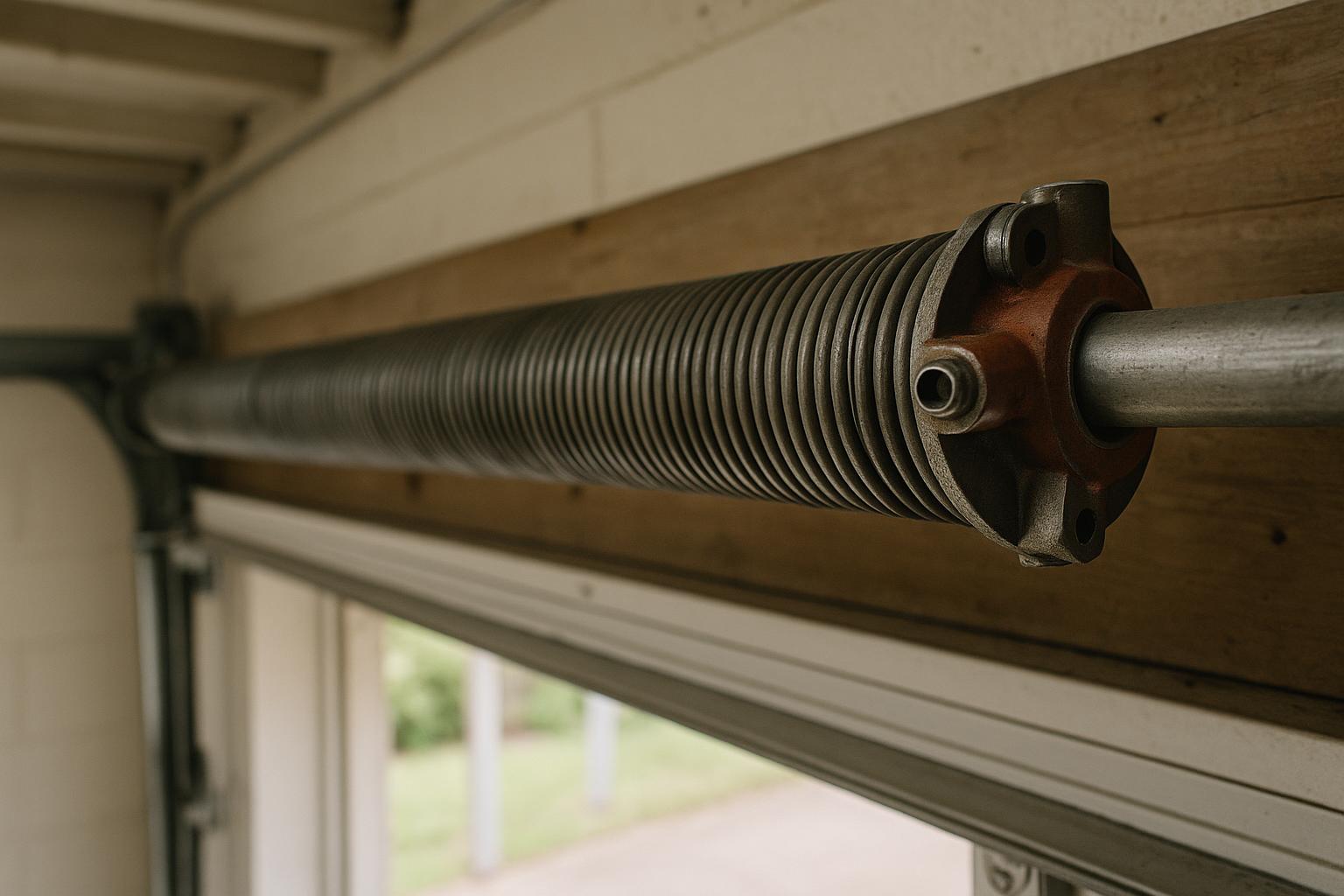
How Garage Door Springs Work
Before we get into the warning signs, it helps to understand the two main types of garage door springs:
- Torsion springs — These are mounted on a metal shaft above the door opening. They use torque to lift the door and are the most common type found on modern residential garage doors in Canton and the surrounding areas.
- Extension springs — These run along the horizontal tracks on either side of the door. They stretch and contract to assist with lifting. They're more common on older or lighter doors.
Both types are under extreme tension, which is why spring replacement is one of the most dangerous garage door repairs to attempt on your own. But recognizing when they need attention? That's something every homeowner can and should do.
7 Warning Signs Your Garage Door Springs Are Failing
1. The Door Feels Heavier Than Usual
Try this simple test: disconnect your garage door opener by pulling the emergency release cord, then manually lift the door about halfway. A properly balanced door with healthy springs should stay in place on its own. If it feels extremely heavy or slams back down, your springs are likely losing tension and nearing the end of their lifespan.
2. The Door Opens Unevenly or Crooked
If one side of your garage door rises faster than the other, it could mean one spring has weakened or broken while the other is still functional. This uneven movement puts extra stress on your opener, tracks, and cables — and it can lead to bigger, more expensive problems if left unaddressed.
3. You Hear a Loud Bang From the Garage
Many homeowners in Canton have told us they heard what sounded like a gunshot or a car backfiring coming from their garage. That loud bang is almost always the sound of a torsion spring snapping. The release of all that stored energy creates an unmistakable noise. If this happens, do not try to operate the door. Call a professional right away.
4. There's a Visible Gap in the Spring
Take a look at the torsion spring above your garage door. A healthy spring is a tightly wound, continuous coil. If you see a visible gap — a section where the coils have separated — the spring has broken and needs immediate replacement.
5. The Opener Struggles or Stops Mid-Cycle
Your garage door opener is designed to work with the springs, not to do all the heavy lifting on its own. If your opener strains, stalls, or shuts off before the door is fully open, worn-out springs could be forcing it to work overtime. Continuing to run the opener under these conditions can burn out the motor entirely.
6. The Door Closes Too Fast
Springs control the speed at which your door descends. When they lose tension or break, the door can come crashing down much faster than normal. This is a serious safety hazard, especially for households with children or pets. If your door slams shut instead of lowering smoothly, stop using it and have the springs inspected.
7. Your Springs Are More Than 7-10 Years Old
Most standard garage door springs are rated for approximately 10,000 cycles. For a typical Canton household that opens and closes the door four times a day, that works out to roughly seven to ten years of use. If your springs are in that age range and you're noticing any of the symptoms above, replacement is likely overdue.
Can You Replace Garage Door Springs Yourself?
We understand the DIY spirit — it's strong here in Canton and across Stark County. But garage door spring replacement is one job we strongly recommend leaving to trained professionals. Here's why:
- Extreme tension: Torsion springs are wound under tremendous force. One wrong move during removal or installation can cause the spring to release violently, resulting in serious injury.
- Specialized tools required: Proper spring replacement requires winding bars, clamps, and precise calibration. Using the wrong tools or techniques can be dangerous and can damage your door system.
- Warranty concerns: Many garage door and opener manufacturers void their warranties if repairs are performed by someone other than a qualified technician.
A professional can typically complete a spring replacement in under an hour, and the cost is far less than an emergency room visit or a ruined garage door opener.
What to Expect During a Spring Replacement
When you call Canton Garage Door Service for a spring replacement, here's what the process generally looks like:
- We inspect the entire door system — not just the springs — to identify any related issues with cables, drums, or the opener.
- We recommend the right spring type and size for your specific door. We often suggest upgrading to high-cycle springs for homeowners who want longer-lasting performance.
- We safely remove the old springs and install the new ones, then balance and test the door to make sure everything operates smoothly.
- We walk you through what we did and answer any questions in plain English — no confusing jargon.
The whole visit usually takes about 45 minutes to an hour, and we clean up after ourselves before we leave.
Extending the Life of Your Garage Door Springs
While springs will eventually wear out no matter what, there are a few things you can do to get the most life out of them:
- Lubricate your springs two to three times a year with a silicone-based garage door lubricant. This reduces friction and helps prevent rust, which is especially important given Canton's humid summers and harsh winters.
- Schedule annual maintenance. A yearly inspection can catch early signs of wear before they become full-blown failures.
- Consider high-cycle springs. If you're replacing springs, ask about options rated for 25,000 or even 50,000 cycles. They cost a bit more upfront but can last two to five times longer.
Don't Wait for the Bang
A broken garage door spring is one of the most common service calls we get from homeowners in Canton, Massillon, North Canton, Louisville, and the surrounding communities. And in most cases, the signs were there weeks or even months before the spring finally gave out.
If anything in this article sounds familiar — a heavy door, a struggling opener, a door that's been acting a little off — give Canton Garage Door Service a call. We'll come out, take a look, and give you an honest assessment. If your springs still have life in them, we'll tell you. If they don't, we'll get them replaced quickly so you can get back to your day without worrying about your garage door.