
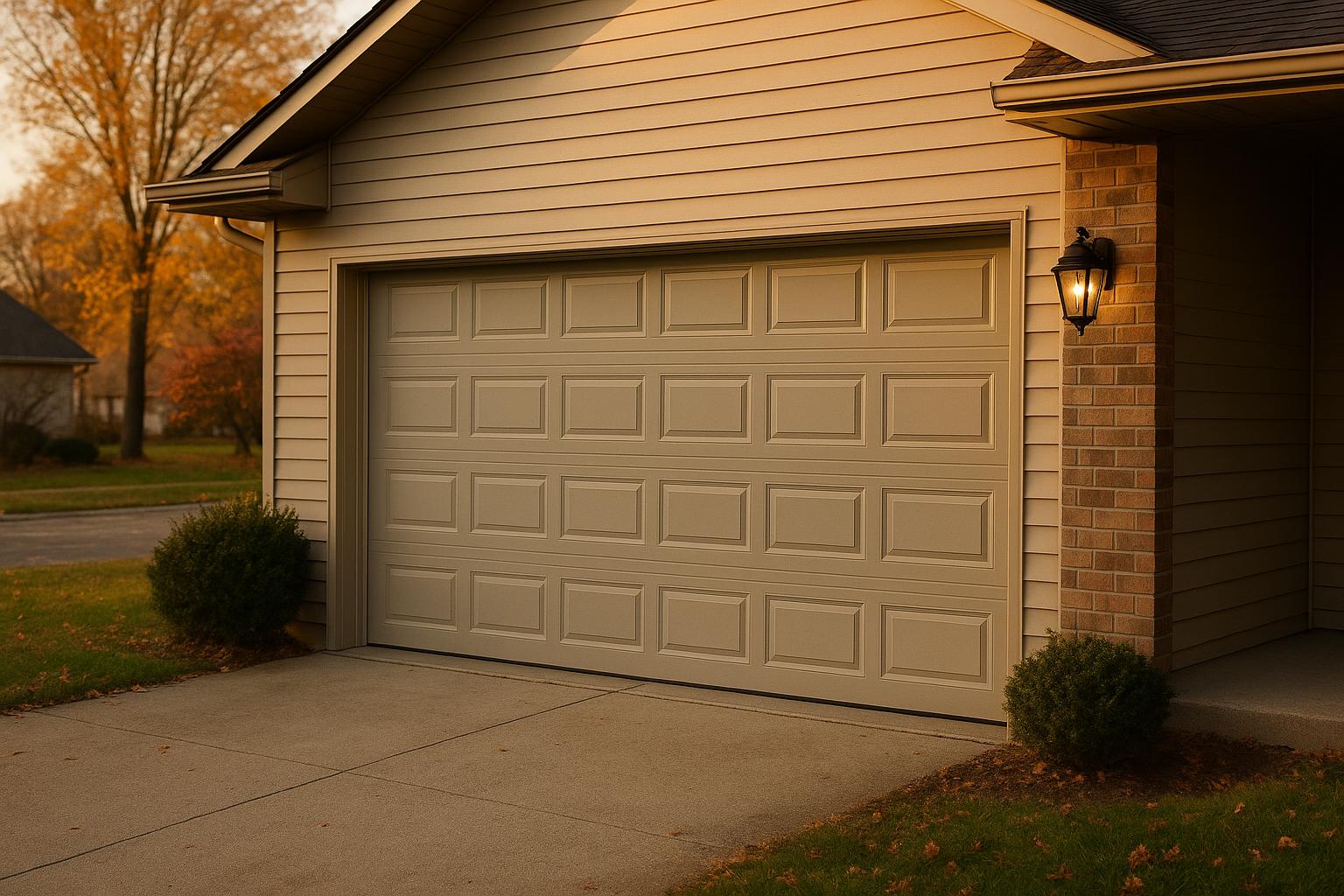
Your Garage Door Has an Expiration Date
Your garage door is one of the hardest-working parts of your home. Think about it — the average household opens and closes their garage door about 1,500 times per year. That's a lot of wear and tear on springs, cables, rollers, tracks, and the door itself. Yet most homeowners in Canton never think about the lifespan of their garage door until something goes wrong.
So how long does a garage door actually last? And what determines whether yours makes it 15 years or 30? Let's break it down component by component so you know what to expect — and what you can do to extend the life of your door.
The Average Lifespan of a Garage Door
A well-built garage door, properly installed and reasonably maintained, will typically last 15 to 30 years. That's a wide range, and where your door falls on that spectrum depends on several factors:
- Material: Steel doors tend to last 20–30 years. Wood doors may last 15–20 years but require more upkeep. Aluminum doors are lightweight and resist rust but can dent more easily. Fiberglass doors can become brittle over time, especially in cold climates like ours here in Canton.
- Quality of installation: A door that was installed correctly — with properly balanced springs, level tracks, and a well-matched opener — will last significantly longer than one that was rushed or done as a DIY project.
- Maintenance: Doors that are lubricated, inspected, and adjusted regularly will outlast neglected ones by years.
- Climate: Canton's freeze-thaw cycles, humidity, and occasional ice storms put extra stress on garage door components. Weatherstripping degrades faster, metal parts can rust, and wood can warp or rot if it isn't sealed properly.
- Usage: A door that opens and closes twice a day will wear out faster than one used only occasionally.
How Long Do Garage Door Components Last?
Your garage door is a system made up of many parts, and they don't all wear out at the same rate. Here's what to expect from the key components:
Garage Door Springs
Torsion springs are rated by cycles. A standard spring is rated for about 10,000 cycles, which translates to roughly 7–10 years for most households. High-cycle springs rated for 25,000 or even 50,000 cycles are available and can last 15–20 years or more. Springs are one of the most common parts that need replacement during a door's lifetime.
Garage Door Opener
A quality garage door opener typically lasts 10 to 15 years. Chain-drive openers tend to be durable but louder, while belt-drive models run more quietly and can last just as long with proper care. If your opener is struggling to lift the door, making unusual sounds, or failing to respond to the remote consistently, it may be nearing the end of its useful life.
Rollers
Nylon rollers generally last about 10,000–15,000 cycles, or roughly 7–12 years. Steel rollers may last longer but are noisier and require more lubrication. Worn rollers make the door louder and harder on the opener, so replacing them on schedule protects other components too.
Cables and Hardware
Cables, hinges, and brackets can last the full life of the door if they're kept free of rust and properly maintained. However, cables can fray over time, especially if the springs are out of balance. A frayed cable is a safety hazard and should be replaced immediately.
Weatherstripping
The rubber seal along the bottom of your door and the weatherstripping around the frame typically lasts 5 to 8 years before it cracks, hardens, or pulls away. Canton homeowners should check their seals before each winter to keep out cold air, moisture, and pests.
Signs Your Garage Door Is Reaching the End of Its Life
Even if your door still opens and closes, there are signs that it's aging out and may need to be replaced rather than repaired:
- Frequent breakdowns: If you're calling for repairs more than once a year, the cost of keeping an old door running can quickly exceed the cost of a new one.
- Visible sagging: Disconnect the opener and lift the door manually to about halfway. If it doesn't stay in place, the springs and balance are off — and if the door panels are warping or sagging, replacement may be the better investment.
- Outdated safety features: Garage doors manufactured before 1993 may lack auto-reverse sensors, which are now required by federal law. If your door doesn't have them, upgrading isn't just smart — it's a safety issue.
- Excessive energy loss: Older, uninsulated doors can let a lot of heat escape during Canton winters. A new insulated door can lower energy costs and make your garage more comfortable year-round.
- Cosmetic deterioration: Peeling paint, rust spots, dents, and cracks don't just look bad — they can signal structural weakness. Your garage door accounts for up to 40% of your home's curb appeal, so appearance matters more than you might think.
How to Maximize the Life of Your Garage Door
You can't stop time, but you can slow down the aging process with some straightforward maintenance habits:
- Lubricate moving parts twice a year. Apply a silicone-based or lithium-based lubricant to springs, rollers, hinges, and tracks. This reduces friction and prevents rust.
- Inspect and tighten hardware. Vibration from daily use loosens bolts and brackets over time. A quick check with a socket wrench twice a year can prevent bigger problems.
- Test the balance. Disconnect the opener and manually lift the door halfway. If it slides up or down on its own, the springs need adjustment — and that's a job for a professional.
- Keep the tracks clean. Wipe down the inside of the tracks with a damp cloth to remove dirt and debris. Don't use WD-40 or grease on the tracks — it attracts grime and can cause the rollers to slip.
- Replace weatherstripping before it fails. Don't wait until you can see daylight under the door. Fresh seals keep out water, cold air, and critters.
- Schedule professional maintenance. An annual tune-up from a qualified technician can catch small problems before they turn into expensive repairs. We recommend Canton homeowners schedule this in the fall, before winter puts extra demands on the system.
When Replacement Makes More Sense Than Repair
There's no magic number that tells you exactly when to replace your garage door, but here's a good rule of thumb: if the cost of a repair is more than half the cost of a new door, or if your door is more than 20 years old and showing multiple signs of wear, replacement is usually the smarter financial decision.
A new garage door also adds real value to your home. According to Remodeling Magazine's annual Cost vs. Value report, a garage door replacement consistently ranks as one of the top home improvement projects for return on investment.
Need an Honest Assessment?
If you're not sure whether your garage door has a few more good years left or if it's time for an upgrade, we're happy to take a look. At Canton Garage Door Service, we'll give you a straightforward evaluation — no pressure, no upselling. We serve homeowners throughout Canton, North Canton, Massillon, Louisville, Jackson Township, and Plain Township with the same honest, dependable service every time.
Give us a call or reach out online to schedule an inspection. Whether your door needs a tune-up or a full replacement, we'll help you make the right decision for your home and your budget.